View some samples of MaxTrax Mandarin here. Scroll down the thumbnails to view all the samplers.
 意外调查
意外调查
(Accident Investigation)“Accidents will happen”. We have all heard that statement before. Unfortunately, sometimes it is true. In spite of our best efforts, things occasionally do go wrong.While many accidents seem to happen for obvious reasons, there may be things that contribute to an accident which are not always apparent. That is why it is vital to conduct a thorough Accident Investigation.
This video on “Accident Investigation” show employees steps that are taken in an accident investigation, and highlight how important it is for employees to fully cooperate with any inquiry.
They also point out that while an investigation’s focus is to determine the cause of an accident, the overall goal is to prevent similar accidents from happening again. The topics covered in the products include:
- The goals of an accident investigation.
- Securing an accident scene.
- “Root-cause” analysis.
- The importance of investigative interviews.
- Assisting in an accident investigation.
- Reporting the “near misses”.
- The role of policies, equipment and training on accident prevention.
- …and more.
Time: 13 Minutes
 禽流感
禽流感
(Avian Flu)Avian Flu – Get the Facts…Not The Hype!!!Avian Flu is an increasingly discussed topic among the media and medical associations such as the CDC (Center for Disease Control). The threat of a global epidemic is very real as the virus has transferred from birds to humans.
What Is It: A form of influenza believed to strike all birds, though domestic poultry are believed especially prone to it. It also has jumped to humans, though no human to human transmission has been reported.
How It’s Passed: Infected birds spread the virus through saliva, feces, and nasal secretions. So far, only humans with direct contact with sick birds have caught the disease. But scientists are worried that bird flu could link with regular human influenza, mutate, and become a deadly new virus and trigger a pandemic.
Symptoms In Humans: Fever, cough, sore throat, muscle aches, eye infections, pneumonia, acute respiratory distress, viral pneumonia. Scientists are exploring more expensive treatment. The World Health Organization also recommends quarantining sick people.
Most experts agree that prevention is the best possible avenue, since vaccines may not be available and vaccinations do not always cure the illness.
This video is a great way to raise awareness in your workplace and give your associates the tools they need to act in a calm, confident manner in the event of an outbreak or potential outbreak.
Program Length: 12 minutes
 保护背后 / 背后安全
(Back Safety)
For many employees, back injuries are something that “happens to the other person… not to me.”Yet four out of five people will experience some type of back problems during their lives.
And many back injuries are caused by common activities experienced both on and off the job… such as lifting, climbing, reaching, etc.
This video on “Back Safety” emphasize the importance of overall back care, both at work and at home, including exercises and weight control.
Topics covered in these products include:
- How the back works.
- Common types and causes of back injuries.
- Effects of back injuries.
- Injury prevention and safety practices.
- Proper lifting techniques.
- …and more.
Time: 21 Minutes
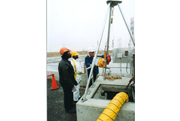 密 空 的 闭 间 进
(Confined Space Entry)
Because of OSHA’s broad definition of “confined space”, this video will be useful to a number of different types of facilities, including manufacturers, utilities, petroleum and chemical industries, hospitals and many others.This video on “Confined Space Entry” address the major areas of employee training required by the regulation.
Topics covered in these products include:
- Contents of the standard.
- Responsibilities of the employer, entry supervisors, attendants and entrants.
- Identifying permit spaces.
- Types of hazards that can be encountered.
- Safety equipment.
- Dealing with emergencies and rescue teams.
- and more.
Time: 19 Minutes
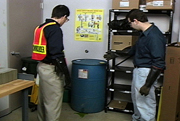 处理有害溢体倒洒的问题
(Dealing With Hazardous Spills)
Hazardous materials are a part of many work situations. They can be found in many different types of facilities and on many job sites… from manufacturing and construction to retail and office environments. Some organizations have to deal with hazardous materials as part of their daily business, and have detailed plans and highly trained workers to handle a sudden spill.But other facilities only have to handle these materials infrequently, and may not have given much thought to what must be done in case of a spill.
This training program “Dealing with Hazardous Spills” is designed to help employees who seldom have to face the dangers of a hazardous spill deal with a cleanup situation. Areas covered in the program include:
- The Hazard Communication Plan.
- The Emergency Response Plan.
- Five levels of OSHA’s HAZMAT training.
- Initial spill response.
- Spill containment.
- Instruments used to identify chemicals involved in a spill.
- Additional hazards of a spill site.
- …and more.
Program Length: 23 minutes
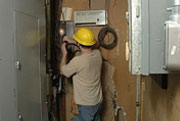 电动安全
电动安全
(Electrical Safety)
Electricity is all around us. It lights up our homes… powers much of the machinery and equipment that we use… and runs many of our tools. We are so used to it, most employees “take it for granted.” Yet electricity can also be dangerous. Employees need to know how electricity works, and what they should do to protect themselves from its hazards.This video on “Electrical Safety” remind employees about electrical hazards they may face in their jobs, and provides the information they need to work safely around electricity.
This program will also assist in satisfying the OSHA training requirements under 29 CFR Part 1910.331 (Electrical Safety Standard) for “non-qualified” employees.
Topics covered in these products include:
- How electricity works.
- Fuses and circuit breakers.
- Grounding and GFIs.
- Safe work practices.
- Outlets, plugs and extension cords.
- Working with electrical equipment.
- Using ladders around electricity.
- Electrical emergencies.
- …and more.
Time: 15 Minutes
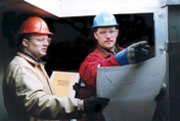 紧急应对策略
(Emergency Response Plan)
Hazardous materials and waste are part of many work situations, and can be found on many types of job sites. OSHA feels that it is so important for employees to know how to recognize these potentially dangerous substances (as well as how to handle and dispose of them properly) they have mandated that anyone working with these materials receive comprehensive training in this area.This training program “HAZWOPER: The Emergency Response Plan” helps employees understand how emergency planning can reduce or eliminate potential exposure to hazardous materials in crisis situations. Areas in the program include:
- The purpose of an Emergency Response Plan.
- The Chain of Command.
- Responsibilities of the Incident Commander.
- Responsibilities of the HAZMAT Specialist.
- Responsibilities of the HAZMAT Technician.
- Responsibilities of the First Responder.
- Communication procedures and the buddy system.
- Personal protective equipment.
- …and more.
Program Length: 15 minutes
 环境与个人责任
(Environment And Your Responsibility)
Stimulates audiences to care more about the environment at work and at home. Stresses personal responsibility for housekeeping, clean environment, following company procedures related to properly disposing of not only hazardous materials/chemicals but any other kind of waste.Covers issues on the impact that waste has on the environment and also how that will eventually affect the people, the company and lastly the community.
Program Length: 10 min.
 办公室工效学
(Ergonomics Office)
Every job makes a different set of demands on the body. Today the issue of how this impacts employees, and what can be done to reduce or eliminate adverse effects is receiving a lot of attention.While there is much debate about many aspects of ergonomics, everyone agrees on one thing… that is by using proper ergonomic techniques, employees can be safer and more productive as well as feel better at the end of the day.
This training product on “Office Ergonomics” address how to recognize ergonomic problems, the potential of adverse effects and practical solutions employees themselves can use to help deal with ergonomic problems in the office.
Topics covered in the products include:
- Physiology of the body.
- Parts of the body most affected.
- Eye strain.
- Pragmatic preventative measures.
- Correct use of office equipment.
- Exercises and stress release.
- and more.
Program Length: 21 minutes
 预防从高处跌落
(Fall Protection)
Falls are the second leading cause of death each year in the United States (after traffic accidents)!Over 10,000 people are killed every year as a result of falls… and 200,000 to 300,000 people are disabled. Eighty-five percent of all falls that occur on the job result in “lost work time”.
This training program “Fall Protection” provides the information employees need to work safely when they are “off the ground”, and satisfies the major training requirements in the OSHA Standard on Fall Protection.
Areas covered in the program include:
- The seriousness of fall hazards.
- Types of environments where falls may occur.
- The “Fall Protection Plan”.
- Concentrating and keeping a clear head.
- The importance of housekeeping in preventing falls.
- Measures that can be taken to protect against falls.
- Protective equipment.
Program Length: 12 minutes
 在工 施的防火安全
(Fire Prevention & Safety in Industrial Facilities)
Among all the safety problems an employee can encounter, fire can be the most frightening. Every year industrial fires cause millions of dollars in damage and result in hundreds of employee injuries, a number of which are fatal. Yet many employees do not realize how their own actions can contribute to the risk of fire.The training program “Industrial Fire Prevention” looks at what causes industrial fires, reviews steps that can be taken to help prevent fires and discusses what employees should do in case of a fire emergency.
Areas covered in the program include:
- Common causes of workplace fires.
- Preventing industrial fires.
- The concept of “flashpoint”.
- “Classes” of fires.
- Fire extinguishers.
- Handling flammable materials.
- Evacuation and other employee responsibilities.
- First aid.
- …and more.
Program Length: 22 minutes
 防止火患
防止火患
(Fire Prevention – The Gory Story)
This video is the most motivating high impact video on the market.Fires are an everyday occurrence, but little attention is paid to fire prevention.
This video will have a long term effect on employees related to causes, prevention and emergency action.
Guaranteed to improve your company’s fire prevention effort. Extremely graphic scenes of burns and fire injuries.
Program Length: 15 minutes
 急救
急救
(First Aid)
In most facilities, not a day goes by without some type of injury occurring. It can be as serious as a chemical burn or as minor as a small cut.But any injury can be painful and affect an employee’s work performance… as well as activities off the job.
This training program “First Aid” shows employees that knowing basic first aid can often limit the severity of any type of injury, or even prevent a death. Areas covered in the program include:
- The seriousness of fall hazards.
- Cuts and bleeding.
- Muscle pulls and sprains.
- Burns.
- Broken bones.
- Shock.
- Artificial respiration and CPR.
- …and more.
Program Length: 13 minutes
 叉车和动业车力工卡的安全
(Forklift Power IndustrialTruckSafety)
Forklifts and other powered industrial trucks are indispensable in many companies. They are rugged, powerful tools that save time, money and effort.But the same qualities that make them so helpful can also make them dangerous.
Using powered industrial trucks results in over 100 fatalities and over 35,000 serious injuries each year. When used incorrectly, or if forklifts and other trucks are not properly maintained, they can do significant damage.
This video on “Forklift/Powered Industrial Truck Safety” have been specifically created to assist facilities in complying with OSHA’s Powered Industrial Truck Standard.
Topics covered in these products include:
- OSHA’s certification process.
- The seven classes of industrial trucks.
- Equipment checkout and maintenance.
- A forklift’s stability triangle.
- Safe operating procedures.
- Lifting and lowering loads.
- Trucks and loading docks.
- …and more.
Time: 28 Minutes
 电动工具与安全
(Hand Power Tool & Safety)
Hand and power tools are used every day in many types of business. They make our work easier and allow us to be more efficient. However, we often fail to see the hazards these tools present.This training program “Hand and Power Tool Safety” shows how accidents can be significantly reduced by applying good general safety rules, and reviews what hazards are associated with the specific types of tools we use. Areas covered in the program include:
- Matching the tool to the job.
- The importance of “state of mind”.
- Personal protective equipment.
- Good safety practices.
- Tool care and maintenance.
- …and more.
Program Length: 13 minutes
 手,手腕和手指的安全
(Hand, Wrist & Finger Safety)
Each year over 500,000 people injure their hands, wrists or fingers. Nearly one out of four “on-the-job” accidents involve these parts of the body.To help reduce these problems it is important for employees to learn about the most common hazards to these areas of the body.
This video on “Hand, Wrist and Finger Safety” review hand, wrist and finger hazards and help employees to take the steps necessary to avoid them.
Topics covered in these products include:
- Physiology of the hand, wrist and fingers.
- Identification of common hazards.
- Proper work procedures.
- Tool use and maintenance.
- Using personal protective equipment.
- Injuries and first aid.
- and more.
Program Length: 15 minutes
 如何处理危险废物
(Handling of Hazardous Materials)
Hazardous materials and waste are part of many work situations, and can be found on many types of job sites. OSHA feels that it is so important for employees to know how to recognize these potentially dangerous substances (as well as how to handle and dispose of them properly) they have mandated that anyone working with these materials receive comprehensive training in this area.In 1976, the U.S. Environmental Protection Agency (EPA) issued the Resource Conservation and Recovery Act (RCRA) to regulate the handling of hazardous waste “from cradle to grave”. Since then other regulations have followed, including OSHA’s 29 CFR 1910.120, also known as HAZWOPER. As part of these regulations, there are varying requirements for employee training, depending on an employee’s specific level of involvement with hazardous materials.
This training program “HAZWOPER: Handling Hazardous Materials” helps employees to understand the nature and “behavior” of hazardous chemicals, and how to reduce or eliminate potential exposure to hazardous materials in their work environments. Areas covered in the program include:
- Physical hazards.
- Flammables/combustibles/explosives/oxidizers.
- Corrosives and irritants.
- Toxic substances and carcinogens.
- Acute and chronic health effects.
- Container labels and MSDS’s.
- Basic first aid for injuries caused by chemicals.
- Emergency response.
- Spillage/leakage/accident procedures.
- …and more.
Program Length: 23 minutes
 耳膜安全 / 耳 音 安全
(HearingSafety)
Everywhere we go we encounter noise. And if this noise is loud enough, or has certain characteristics, it can cause damage to our hearing… often permanently.Over 15 million Americans have a measurable hearing loss, most often caused by “on-the-job” injuries.
Yet many employees don’t realize that not only can hearing problems affect their work, they can alter their personal lives dramatically as well.
This video on “Hearing Conservation and Safety” have been specifically created to assist facilities in complying with OSHA’s revised Hearing Conservation Standard.
Topics covered in these products:
- How our ears “work”.
- Types of hearing damage/loss.
- Common causes of hearing damage/loss.
- Potential effects of hearing damage.
- Noise avoidance and hearing safety practices.
- Selection and use of personal protective equipment.
- …and more.
Time: 27 Minutes
 硫化氢之安全处理
(Hydrogen Sulphide Safety)
Hydrogen Sulphide is one of the most deadly industrial gases. It has been referred to as a silent killer. This comprehensive video covers a wide range of topics including:- characteristics of H2S
- monitoring areas for H2S levels
- emergency procedures
- hazard minimization
- contingency planning, SO2 and more.
Complete and up-to-date. A great tool for annual training.
Program Length: 20 minutes
 锁标记
锁标记
(Lock-Out Tag-Out)
Created specifically to assist facilities in complying with the employee training requirements of OSHA’s “Lock-Out/Tag-Out” regulation, these products discuss the OSHA Lock-Out/Tag-Out Standard, including the Energy Control Plan.This video on “Lock-Out/Tag-Out” use environments familiar to employees working with both electric and hydraulic/pneumatic equipment and point out specifically where Lock-Out/Tag-Out procedures should be applied.
Topics covered in these products include:
- The regulation itself.
- “Energized” machinery.
- Lock-Out/Tag-Out concepts and procedures.
- Lock-Out/Tag-Out devices.
- Electrical systems.
- Hydraulic and pneumatic systems.
- …and more.
Time: 22 Minutes
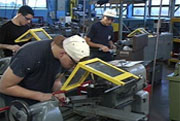 机器看守的安全
(Machine Guards Safety)
Machinery comes in many sizes and shapes, and it can present many different types of hazards.Each year thousands of employees across the country are injured by the machines they are most familiar with… and which they believe are safe.
The risk of accidents from powered machinery is so great OSHA estimates that lack of machine guarding is the second most frequent safety violation in industry today.
This video on “Machine Guard Safety” are designed to help employees understand the dangers of working with machinery… and how those risks can be minimized by proper installation and use of safety guards and devices.
Topics covered in these products include:
- Basic machine operations.
- Fixed guards.
- Adjustable and self-adjusting guards.
- Interlock devices.
- Drive train and perimeter guards.
- “Drop probe” devices.
- Restrain and pullback devices.
- Adjustment, inspection and maintenance of safety guards.
- …and more.
Time: 19 Minutes
 处理材料的安全
(Material Handling Safety)
Many employees feel that moving and handling materials that they work with every day is an “ordinary” task, not something that they really need to be concerned about.Yet there are hundreds of thousands of “materials handling” accidents every year… from small splinters, cuts or scrapes… to crushed fingers, hands and feet… even deaths.
This video on “Materials Handling Safety” provide the information employees need to work safely when handling various types of materials.
Topics covered in these products include:
- Types of potential hazards.
- Planning a job.
- Personal protective equipment.
- Proper lifting and moving techniques.
- Other ergonomic considerations.
- Hand trucks, carts and pallet trucks.
- Mechanical lifting devices.
- …and more.
Time: 14 Minutes
 介绍与讲解实验室安全准则
(Orientation to Laboratory Safety)
A laboratory can be a dangerous place, and with the daily pressures to get things done employees can be tempted to take shortcuts and ignore safety precautions. And with the increasing complexity of the equipment and procedures involved in experiments, employees need an even greater knowledge of safety practices and procedures than they may have had in the past.This training program “Orientation to Laboratory Safety” shows both new employees and “seasoned veterans” the importance of safety in the laboratory… as well as reviews the OSHA regulations and good safety practices that apply to laboratory environments.
Areas covered in the program include:
- OSHA regulations.
- Material Safety Data Sheets (MSDSs).
- Planning safe experiments.
- Personal protective equipment.
- Ventilation controls.
- Chemical storage.
- Accidents and emergencies.
- Waste disposal.
- …and more.
Program Length: 11 minutes
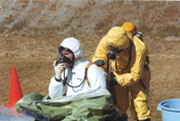 个人防护设备
(Personal Protective Equipment)
“On-the-job” injuries affect all types of people doing all types of work. Each year over 570,000 workers are injured… at a cost to employers of over $100 billion annually.Government surveys show that the most common cause of workplace injuries today is due to employees not using proper PPE./p>
Virtually everyone will experience one or more “on the job” injuries during their working life. In most cases appropriate equipment is readily available, yet employees do not recognize the need for this equipment, or take the time to use it.
This video assist facilities in complying with OSHA’s Standard on Personal Protective Equipment.
Topics covered in these products include:
- Review of OSHA’s Personal Protective Equipment (PPE) Standard.
- PPE for eye and face hazards.
- PPE for respiratory hazards.
- PPE for head hazards.
- PPE for foot hazards.
- PPE for electrical hazards.
- PPE for hand and finger hazards.
- …and more.
Time: 27 Minutes
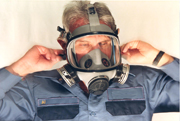 呼吸系 防 和 安全
(Respiratory Protection and Safety)
One of the problems with many respiratory hazards (such as fumes or gases) is that employees cannot easily “see” them.Even more visible hazards, such as dusts, are often accepted as part of a “normal” work environment.
As a result, many respiratory problems only become clearly evident well after the original exposure. Yet once they occur, most respiratory problems are “chronic” and long lasting.
To further protect employees from these hazards, both OSHA and NIOSH have issued changes to their respiratory protection requirements.
This video on “Respiratory Protection and Safety” have been specifically created to assist facilities in complying with OSHA’s Respiratory Standard.
Topics covered in these products include:
- How the respiratory system “works.”
- Common types and causes of respiratory hazards.
- Potential effects of respiratory hazards.
- Good respiratory safety practices.
- Respiratory safety equipment.
- OSHAs Assigned Protection Factors for respirators.
- Fit testing protocols.
- Cleaning/disinfecting procedures.
- …and more.
Time: 22 Minutes
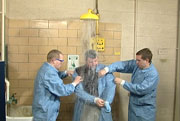 紧急洗眼器和淋浴
(Safety Showers and Eye Washes)
No matter how many precautions employees take, accidents sometimes happen.In these situations quick action is essential, and if the incident involves a hazardous material, using a safety shower or eyewash can be extremely important.
This videoon “Safety Showers and Eye Washes” review for employees situations where safety showers and eye washes should be used, as well as how to properly use them.
Topics covered in these products include:
- Types of showers and eye washes.
- How to operate showers and eye washes correctly.
- Chemical splashes.
- Appropriate shower and eye wash techniques.
- Helping an accident victim use a shower/eye wash.
- First aid.
- Maintenance and testing of showers and eye washes.
- …and more.
Time: 12 Minutes
 安全与监督
安全与监督
(Safety & Supervisor)
Supervisors are responsible for safety, along with the company safety manager.Explains a safety program, how the supervisor’s actions, enforcement of safety rules and legal responsibilities are the key factors in an effective program.
Program Length: 20 minutes
 安全审计
安全审计
(Safety Audits)
A single workplace accident can be devastating. Someone can be injured… or even killed. Property, equipment or materials can be damaged or destroyed.And work could come to a complete standstill. All of these things can happen if efforts are not made to protect employees. One way to accomplish this is to conduct a safety audit.
This is an examination of the work area to make sure it is as safe as possible and all potential hazards are corrected or removed.
This training product on “Safety Audits” inform employees about the goals of a safety audit, and how all workers should become involved. Topics covered in these products include:
- A workplace analysis.
- Administrative controls.
- Engineering controls.
- Personal protective equipment.
- Emergency response procedures.
- Regulatory compliance, safety and health training.
- Accident investigation.
- A safety self-assessment.
- and more.
Program Length: 15 minutes
 家政安全与防止意外
(Safety Housekeeping & Accident Prevention)
Good safety housekeeping can significantly reduce accidents and injuries in any type of work environment. By developing good safety habits, and by being aware of work environments and any hazards associated with it, employees can reduce the risks.This training program “Safety Housekeeping and Accident Prevention” demonstrates to employees how to prevent workplace accidents by paying attention to safety housekeeping considerations. Areas covered in the program include:
- Safety awareness.
- Rubbish and excess materials.
- Keeping aisles and stairways clean.
- Ropes and electric cords.
- Dealing with hazardous chemicals.
- Tool maintenance.
- Storage of tools.
- …and more.
Program Length: 13 minutes
 介绍与讲解安全准则
(Safety Orientation)
Thinking about safety should be as natural as thinking about other aspects of the job.Employees should be able to anticipate the possibility of accidents before they happen.
Yet workplace accidents cause millions of people to suffer painful injuries every year, and cost business in the USA alone almost $90 billion per year in medical bills, lost wages and lost production time.
This video on “Safety Orientation” address two of the most prominent safety issues confronting employers today… that of developing a good “safety attitude” in their employees, as well as providing “introductory safety training”.
Topics covered in the products include:
- Developing “safety awareness”.
- Basics of accident prevention.
- Hazard evaluation.
- Safety housekeeping.
- Tool use and maintenance.
- Fire prevention and safety.
- Use of personal protective equipment.
- and more.
Program Length: 18 minutes
 滑倒, 踬 和下跌
(Slips Trips And Falls)
Most employees don’t give much thought to the prospect of slipping, tripping or even falling on the job.Yet these types of accidents account for more workplace injuries annually than any other accident category. Many of these injuries can be disabling… or even fatal.
This Video on “Slips, Trips and Falls” show employees the situations that can lead to slips, trips and falls, and what they can do to avoid or prevent these accidents.
Topics covered in these products include:
- Why slips, trips and falls occur.
- Common causes of accidents.
- Potential health effects of resulting injuries.
- Techniques used to avoid injury.
- The importance of safety shoes.
- How to ” fall safely”.
- …and more.
Time: 17 Minutes
 理解化学危害物
(Understanding Chemical Hazards)
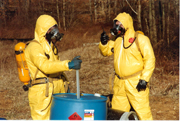
Hazardous materials and waste are part of many work situations, and can be found on many types of job sites. OSHA feels that it is so important for employees to know how to recognize these potentially dangerous substances (as well as how to handle and dispose of them properly) they have mandated that anyone working with these substances receive comprehensive training in this area.Hazardous materials and waste are part of many work situations, and can be found on many types of job sites. OSHA feels that it is so important for employees to know how to recognize these potentially dangerous substances (as well as how to handle and dispose of them properly) they have mandated that anyone working with these substances receive comprehensive training in this area.
This training program “HAZWOPER: Understanding Chemical Hazards” introduces employees to chemical hazard regulations and provides training on the various types of hazardous chemicals found in industrial environments. Areas covered in the program include:
- Chemical hazard concepts.
- Types of hazardous chemicals.
- Characteristics and effects of various types of chemicals.
- The Material Safety Data Sheet (MSDS).
- Container labeling.
- Safe handling practices.
- Use of personal protective equipment (PPE).
- Spills and cleanup.
- …and more.
Program Length: 21 minutes
 焊接安全
焊接安全
(Welding Safety in the Workplace)
People have been welding in one form or another for over 2,000 years. But like many industrial processes, welding can be very dangerous.Whether an employee is working with the hazardous gases of an “oxyacetylene” unit… the high voltage of “stick welding”… or the combination of gas and electricity that powers “MIG” and “TIG” operations… flying sparks, toxic fumes, electric shock and high temperatures are just some of the things that can make welding a dangerous proposition.
This video on “Welding Safety” remind employees that there are indeed a number of hazards associated with welding, and provide the information they need to work safely when involved with welding operations.
Topics covered in these products include:
- Getting “authorization” for welding operations.
- Sparking and the risk of fire.
- Guards and protective barriers.
- Hazardous fumes and ventilation.
- The use of respirators and other personal
- Protective equipment.
- Eye protection (welding helmets, filters, glasses and goggles)
- Inspecting welding equipment.
- Proper welding safety procedures.
- …and more.
Time: 14 Minutes
 工作训练与工程控制
(Work Practices & Engineering Controls)
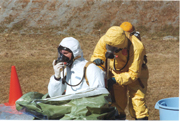
Hazardous materials and waste are part of many work situations, and can be found on many types of job sites. OSHA feels that it is so important for employees to know how to recognize these potentially dangerous substances (as well as how to handle and dispose of them properly) they have mandated that anyone working with these substances receive comprehensive training in this area.SafetyMax’s VCD/DVD training program “HAZWOPER: Work Practices and Engineering Controls” helps employees to understand the nature and “behavior” of hazardous chemicals, and how to reduce or eliminate potential exposure to hazardous materials in their work environments through the use of work practices and engineering controls. Areas covered in the program include::
- General HAZMAT work practices.
- The Site Safety and Health Plan.
- Responsibilities of the Site Safety and Health Officer.
- General HAZMAT engineering controls.
- Ventilation systems.
- Remote-controlled equipment.
- The use of eyewash stations.
- …and more.
Program Length: 18 minutes